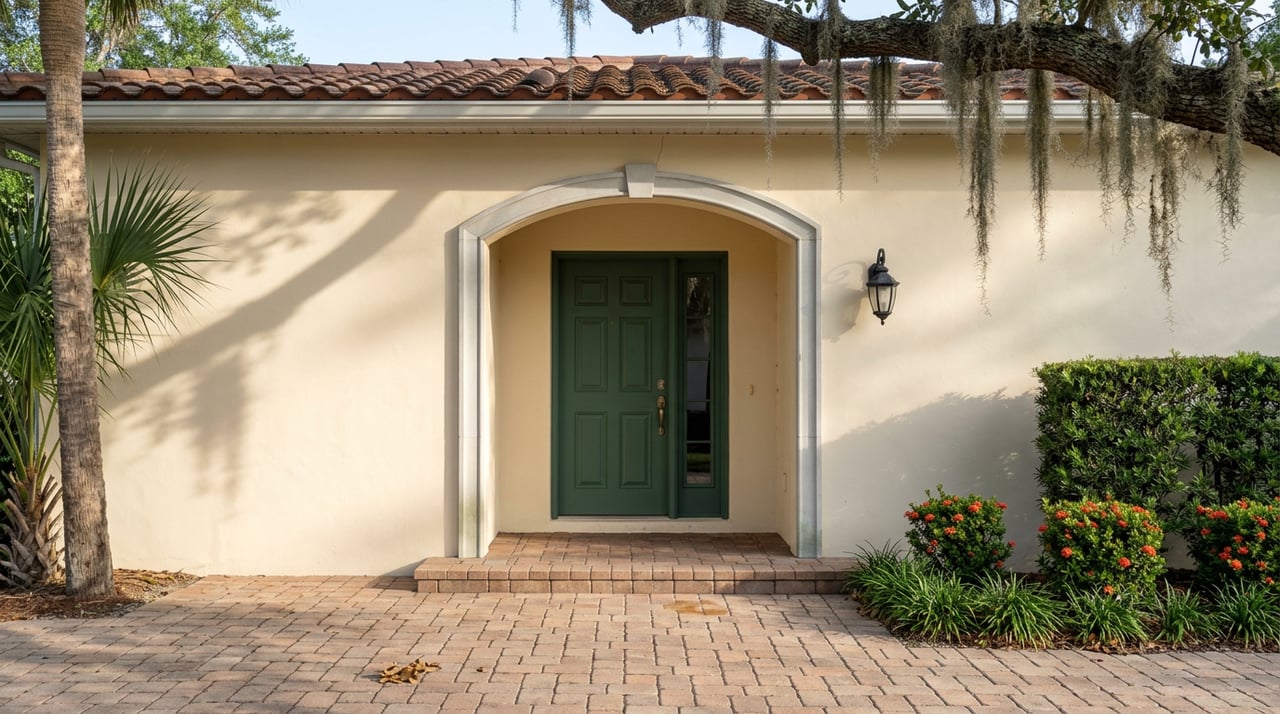
How Wind Mitigation Affects South Tampa Historic Homes
August 20, 2026
August 20, 2026
Two houses, a few blocks apart in South Tampa. One is a renovated 1925 bungalow on a canopy street in Hyde Park. The other is new construction in Beach Park, still smelling faintly of fresh paint. Similar square footage. Overlapping price range. The same pool of buyers touring both on the same Saturday.
The new build goes under contract in days. The bungalow lingers, gets a price cut, and finally closes to a buyer who nearly walked twice during the option period.
The difference wasn't the kitchen, the roofline, or even the price per square foot. It was a five-page insurance form almost nobody had heard of until a lender's underwriter asked for it.
South Tampa's market has settled into a pattern local brokers describe as two-tiered: newer construction moving briskly while older bungalows sit for longer stretches, largely because of what it costs to insure them. Owners of historic bungalows have been reporting premiums running $4,000 to $8,000 a year, a gap wide enough to push comparison shoppers toward homes built to current wind mitigation standards instead of a similarly priced original.
The split shows up most clearly when you compare neighborhoods that sit blocks apart but not decades apart. Palma Ceia and Virginia Park, dense with early-1900s bungalows alongside newer infill, have stayed competitive enough to produce regular multiple-offer situations on the updated homes. Hyde Park and Davis Islands, where inventory leans more heavily historic and less renovated, have given buyers noticeably more room to negotiate on the properties still carrying original systems. Same peninsula, same walk to Bayshore Boulevard, different leverage depending on the age of the roof and the plumbing behind it.
Charm doesn't explain that split. Paperwork does.
Florida law requires insurers to credit specific hurricane-resistant features on a home, verified through a standardized form called OIR-B1-1802. The form documents things like roof covering material and age, how the roof deck is attached, the roof-to-wall connection, roof shape, secondary water resistance, and whether every opening, including garage doors and skylights, is protected against wind and debris. Under Florida Statute 627.0629, once a licensed inspector verifies a feature, the carrier has to apply the corresponding discount.
That discount only touches the wind portion of the premium, which in Florida can run anywhere from roughly 30 to 70 percent of the total bill depending on how exposed the location is, higher along the coast and lower inland. On a fully documented home, credits against that wind portion can run 20 to 45 percent, which is real money on a $4,000 to $8,000 annual bill.
Here's the part that matters this year. The form itself was rewritten for the first time in over a decade, based on a 2024 state-commissioned wind-loss study. The Florida Cabinet approved the revision in September 2025, and every inspection performed on or after April 1, 2026 has had to use the new version, which demands tighter proof: permit numbers, product approval numbers, dated photographs, not just a checked box. Reports completed before that date on the old form stay valid for their full five-year window as long as nothing structural has changed on the house. Carriers began applying the new form's credit tables around July 2026.
Buyers touring a 100-year-old Craftsman bungalow in Hyde Park often assume the wind mitigation report and the four-point inspection are the same paperwork. They're not, and confusing them is where deals lose weeks.
| Wind Mitigation Inspection | Four-Point Inspection | |
|---|---|---|
| What it decides | How much discount you get | Whether a carrier will write the policy at all |
| Governing form | OIR-B1-1802, new version mandatory since April 1, 2026 | Standard carrier template, no single statewide form |
| Typical cost | $75 to $150 | $75 to $150 |
| When it's triggered | Any home seeking wind credits | Homes generally 20 years or older, carrier-dependent |
| How long it lasts | Up to 5 years if no structural changes | A snapshot, not renewable on its own |
The practical advice, echoed across the inspection industry, is to order both at the same visit when buying an older home. One tells you what you'll pay. The other tells you whether you'll be insured at all.
Hyde Park's housing stock leans heavily on original 1920s and 1930s Craftsman bungalows. Palma Ceia mixes early-20th-century bungalows with Mediterranean and Spanish Revival homes from the same era. Beach Park is different, a corridor of 1940s to 1960s ranch homes increasingly torn down and rebuilt, which is part of why new construction moves faster there.
Every one of those older homes crosses an age line that has nothing to do with condition. Historically, many carriers wanted a four-point inspection once a home passed 20 years old, and in the Tampa and Pinellas market, Citizens has drawn that line at 25 years. This year, that threshold has started loosening in places, with some carriers pushing it to 30 or even 40 years as the broader insurance market stabilizes. But loosening isn't the same as gone. A freshly renovated 1926 bungalow with new plumbing and a two-year-old roof still has to clear this gate before a lender will fund the loan, and the inspection has nothing to do with how good the renovation looks in photos.
Picture two nearly identical bungalows that sold on the same Palma Ceia block earlier this year. The seller of one ordered a wind mitigation inspection back in February, before the April 1 deadline, and locked in credits under the old form for up to five years. The seller of the other waited until early summer to inspect, after the new form had already become mandatory, and needed the tighter documentation, permit records, dated photos, before a carrier would apply any discount, with that carrier not running the new credit tables until July.
Same street, same era of construction, two different insurance timelines. A buyer comparing those two listings on price alone would have missed the variable that actually determined the total monthly cost.
That gap played out against a broader backdrop of rate relief. Citizens Property Insurance delivered an average 8.7 to 8.8 percent statewide rate cut at spring 2026 renewals, the largest reduction in the company's history, a result tied to 2022 and 2023 tort reform legislation that curbed one-way attorney fees and assignment-of-benefits litigation. Fewer lawsuits mean lower claims costs for carriers, which is part of why more than a dozen new insurers have entered the Florida market since those reforms passed. The market is loosening overall. It just isn't loosening evenly, and older South Tampa homes still carry the paperwork burden that newer ones skip.
If you're buying an older home in Hyde Park, Palma Ceia, or Beach Park, ask for the seller's existing wind mitigation report on the first day of your inspection period, not the tenth. If the home is anywhere near that 20 to 25 year mark, schedule the four-point at the same visit so you know whether the house is even insurable before you're deep into your option period. Build extra time into your financing contingency this year specifically, since carriers running the new form's documentation requirements may take longer to return a quote than they did a year ago.
If you're selling one of these homes, get a current wind mitigation report before you list rather than after an offer comes in. A documented discount is a concrete number a buyer's lender can use immediately. An assumed discount is just a conversation, and conversations don't close loans.
I already have a wind mitigation report from last year. Do I need a new one under the 2026 rules? Not necessarily. If it was completed before April 1, 2026 on the previous form, it stays valid for the rest of its five-year window as long as no structural changes have been made to the home. You'd only need a fresh one if you replace the roof, add impact windows, or the report simply expires.
If I'm buying, does the seller's existing report transfer to me? Usually not. Most reports are tied to the current homeowner's policy, so plan on ordering your own after closing, and factor that cost and timeline into your first year of ownership.
Does new construction skip all of this? New construction generally skips the four-point inspection entirely, since the home is already built to current code. Many new builds also see less need for a separate wind mitigation report, since the construction standards are documented at permitting, though it's still worth confirming with your specific carrier before you assume the discount is automatic.
South Tampa's bungalows aren't losing to new construction because they're worse houses. They're losing time to a form most buyers have never seen before their lender mentions it. Knowing that going in is the difference between a smooth thirty-day close and a summer spent chasing paperwork on a house you already fell in love with.
If you're weighing a historic South Tampa bungalow against new construction, or trying to price a listing that's competing against both, Vincent Zeoli can walk through the specific insurance timeline for your address before you write the offer. Let's Connect.
Stay up to date on the latest real estate trends.

Vincent is a top producing real estate associate who is committed to making your home sales or purchase experience as easy as he can for you to reach your goal. Contact him today!