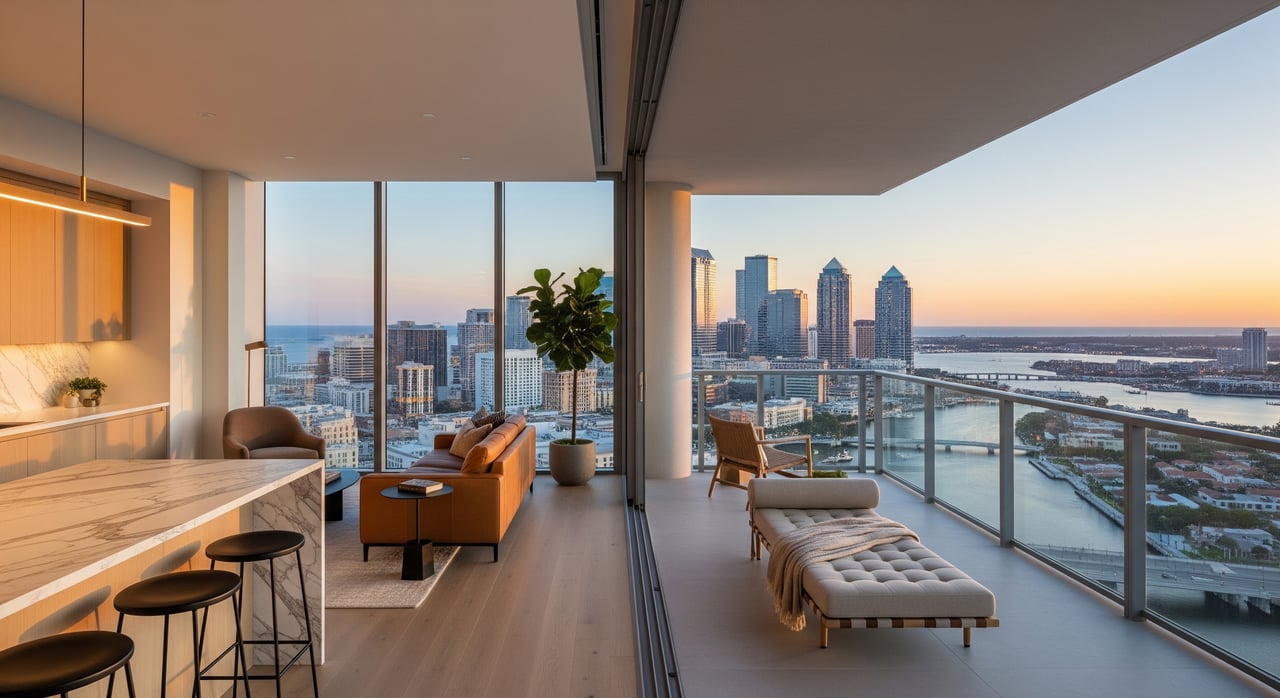
Inside Downtown Tampa Condo Living in High-Rise Towers
February 5, 2026
February 5, 2026
Ever wonder what life actually feels like in a Downtown Tampa high-rise? Picture morning coffee on a balcony, the Riverwalk below coming to life, and a quick stroll to dinner or a show. If you are weighing the trade-offs between low-maintenance condo living and the energy of an urban core, this guide is for you. You will learn how buildings differ, where people spend their time, and what to budget for HOA dues, insurance, and more. Let’s dive in.
Downtown Tampa is the region’s central business and cultural district. It blends office towers, residential buildings, retail, parks, museums, and hospitals, all stitched together by the Tampa Riverwalk. Recent redevelopment, including the Water Street area and infill projects, has accelerated new residential options and street-level retail.
Residents are a mix of young professionals, empty nesters and retirees, investors, and some smaller households. Many choose downtown for walkability, entertainment access, and a lock-and-leave lifestyle. Housing spans older mid-century towers to modern luxury buildings. Entry-level one-bed units in older buildings can be more affordable, while new construction and riverfront residences reach premium price points. Market pricing changes often, so verify current numbers before you shop.
High-rise condos offer studios, one-bed, two-bed, three-bed, and penthouses. Studios and one-beds are compact, often under 800 to 900 square feet. Two-beds commonly range from roughly 900 to 1,400-plus square feet. Penthouses and combined units can be much larger.
Most newer buildings favor open kitchens, quartz or stone counters, stainless appliances, and in-unit laundry. Floor-to-ceiling windows and balconies are common in newer towers, giving you city or river views. Older buildings may have more segmented layouts and smaller kitchens, but sometimes offer more square footage for the price.
Many downtown towers include fitness centers, pools, rooftop terraces, and secure lobby access. You often find concierge or front-desk services, package rooms, co-working spaces, and meeting or party rooms. Assigned garage parking, guest suites, and bike storage are typical in larger buildings. EV charging is increasingly common.
Security often includes controlled garage access, FOB or keycard entry, and video surveillance in common areas. Luxury buildings may add valet and dedicated concierge staff. Pet-friendly features like dog wash stations and small dog runs are available in many communities, though rules vary by building.
If you enjoy being on foot, Downtown Tampa delivers. Many residents walk to restaurants, coffee, and parks. The Tampa Riverwalk links parks, museums, and dining along the Hillsborough River, creating a go-to route for daily runs, dog walks, or evening strolls.
You will notice several activity pockets within walking distance of many towers: Water Street, Armature Works and the West Riverfront, Channelside, Tampa Theatre, and Curtis Hixon Park. These clusters keep the calendar lively with events, markets, and performances.
Transit options include HART bus routes serving downtown corridors and the TECO Line Streetcar connecting downtown with Channelside and Ybor City. Biking is popular along the Riverwalk and certain lanes. Ride-hailing is widely used for nights out or short trips.
For driving, you have direct access to I-275 and I-4 for regional commutes. Keep in mind that event nights around Amalie Arena or large conventions can slow traffic. On-site parking policies vary by building, so confirm the number of assigned stalls, guest parking rules, and any EV charging availability as part of your search.
Food choices range from casual cafes and gastropubs to waterfront dining and upscale options. Food halls such as Armature Works expand the grab-and-go and shared-table scene. Stadium events, concerts, films at Tampa Theatre, and museum exhibits near Curtis Hixon Park build a full social calendar. Channelside and Harbour Island add more nightlife and restaurants within a short hop.
With that activity comes city noise. Higher floors reduce street sounds, though event traffic and occasional helicopter noise are still possible. If noise is a concern, tour at different times of day, including evenings and during major events, to see how it feels.
Many buildings are pet-friendly, but associations set specific rules. Expect limits on number of pets, weight, and sometimes breed. If you have pets, ask to see the exact condo rules before you put in an offer. Confirm where you can walk dogs, on-site pet facilities, and nearby green spaces.
Monthly condo association fees vary widely by building age, size, and amenity level. Dues typically support the master insurance policy for the building, common area upkeep, landscaping, security, elevators, and reserves. Some include cable or internet. Luxury towers with full-service amenities often carry higher dues. Older buildings may look more affordable at purchase but can require larger budgets for maintenance and assessments.
Before you buy, review the association’s current budget, reserves, meeting minutes, and any pending or recent special assessments. Ask about capital projects like roofs, plumping stacks, facade work, and elevators.
In Florida, master policies and owner coverage work together. Clarify whether the building’s master policy is “bare walls” or “all-in,” and confirm wind and hurricane coverage. Ask about owner deductibles and how they are handled for individual units.
Downtown Tampa sits near tidal water, and some parcels are within FEMA flood zones. Lenders often require flood insurance, and pricing can vary. It helps to confirm the building’s elevation and flood mitigation measures. Newer towers commonly have impact-rated windows and modern wind standards. For older buildings, look for documented retrofits, compliance updates, and current emergency plans.
Urban convenience depends on the details. Verify how many parking stalls convey with your unit and where they are located. Ask about guest parking rules, electric charging, and bike storage. Check whether storage lockers are available and if there is a waitlist. If you rely on rideshare, identify clear pick-up and drop-off points near your lobby.
Many condo associations limit short-term rentals or set minimum lease terms. The City of Tampa also has regulations and registration requirements that apply to short-term rentals. If you plan to rent, confirm both the building rules and city requirements before you buy.
Resale values downtown often reflect a building’s reputation, reserves, claim history, and views. Proximity to the Riverwalk or key dining nodes can help. Rental demand tends to be steady from professionals and transferees, but income potential depends on policies and current market conditions.
Use this on-the-ground list when you visit:
Choose this lifestyle if you value walkability, easy access to events, and low-maintenance living. Expect a vibrant street scene, strong amenity options, and the trade-off of HOA dues and building rules in exchange for convenience and security. Your best move is to pair first-hand touring with a careful read of the condo documents so you know exactly what life and costs look like in your chosen building.
If you want tailored guidance from a local who understands each tower’s strengths, reserves, and rules, connect with Vincent Zeoli. You will get a calm, step-by-step process, from shortlisting buildings to reviewing budgets and negotiating a confident offer.
Stay up to date on the latest real estate trends.

Vincent is a top producing real estate associate who is committed to making your home sales or purchase experience as easy as he can for you to reach your goal. Contact him today!